VLAN Segmentation: Intro Guide For New Analysts
If you're new to medical device integration, one of the first acronyms you'll hear thrown around in network meetings is VLAN . Network engineers will mention it casually. Biomed teams will reference it when troubleshooting. Vendors will ask which one your device is on. This guide is meant to give you the foundation. Not the…

If you’re new to medical device integration, one of the first acronyms you’ll hear thrown around in network meetings is VLAN. Network engineers will mention it casually. Biomed teams will reference it when troubleshooting. Vendors will ask which one your device is on.
This guide is meant to give you the foundation. Not the deep technical theory, but enough working knowledge to follow conversations, ask the right questions, and understand the role VLANs play in a hospital environment.
What Is a VLAN?
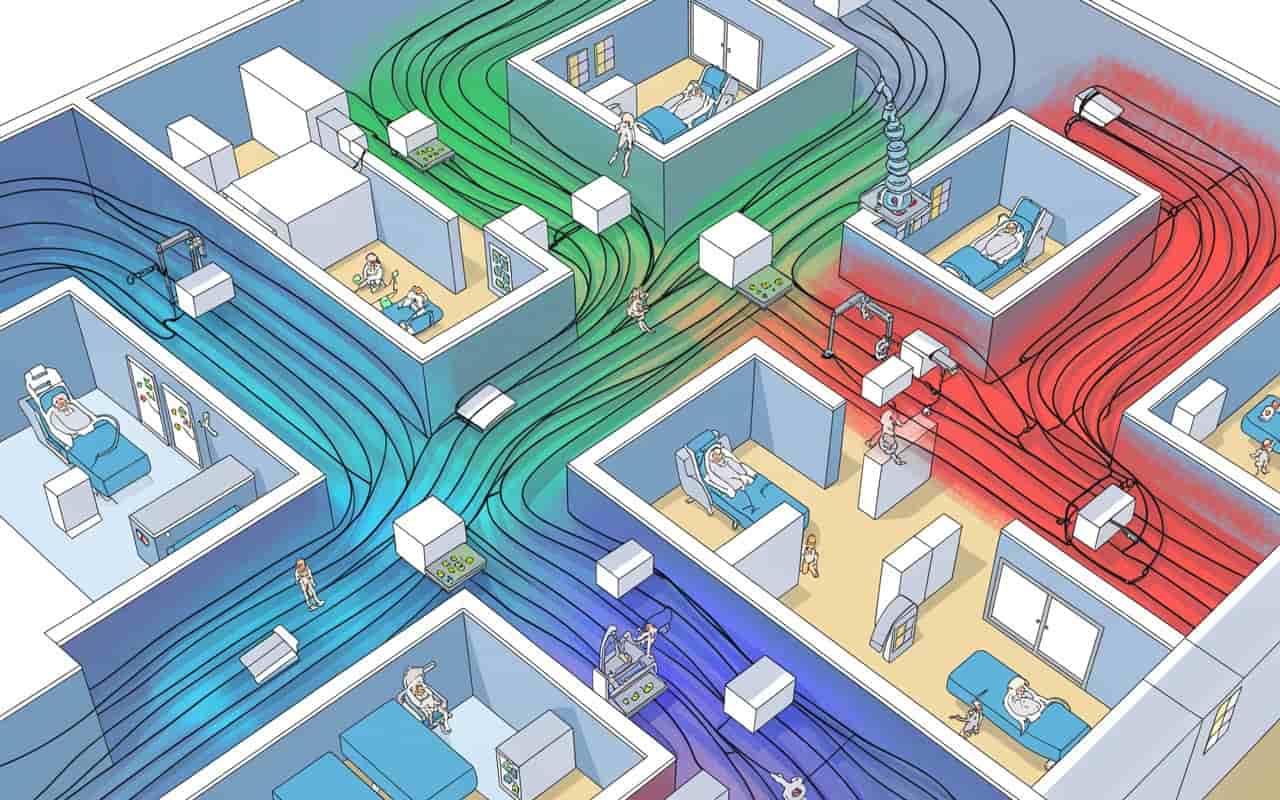
VLAN stands for Virtual Local Area Network. It’s a way of taking one physical network and splitting it into multiple logical networks that behave as if they were separate.
Imagine an apartment building with one front door. Everyone walks through the same entrance, but each unit is its own private space. A VLAN works the same way.
Devices share the same physical switches and cabling, but they’re grouped into separate logical “apartments” that don’t automatically see each other.
Without VLANs, every device on a network can potentially talk to every other device. With VLANs, traffic is contained to its assigned group unless someone explicitly allows it to cross over.
What Does VLAN Segmentation Actually Mean?
VLAN segmentation is the practice of intentionally dividing a network into these logical groups based on purpose, function, or sensitivity.
A network team decides which categories of devices and systems belong together, creates a VLAN for each, and assigns devices accordingly. The result is a network that looks like one infrastructure on the outside but operates as many smaller, controlled networks on the inside.
Segmentation is the strategy. VLANs are the tool that makes it possible.
Who Implements VLAN Segmentation in a Hospital?
VLAN segmentation isn’t owned by a single team. It’s a collaboration between several groups, each with a different stake in how the network is structured.
Network and Infrastructure Teams design the VLANs, configure the switches and routers, and maintain the segmentation over time. They own the technical implementation.
Information Security Teams define the policies that segmentation has to enforce. They determine which systems need to be isolated from each other and what traffic should be allowed between segments.
Biomedical and Clinical Engineering Teams manage the medical devices themselves. They know which devices exist, where they’re deployed, and what each one needs to function.
Medical Device Integration and Application Teams own the systems that medical devices integrate with, including the EHR, PACS, and various middleware platforms.
Integration Analysts sit in the middle. You’ll often be the person translating between these groups, especially when a device needs to communicate with a system that lives on a different VLAN.
Where Are VLANs Used in a Hospital Network?
VLANs show up everywhere in a modern hospital network. Some of the most common areas include the following.
Clinical Workstations used by nurses and physicians to access the EHR typically sit on their own VLAN with tight access to patient data systems.
Medical Devices are usually grouped into one or more VLANs depending on the size and complexity of the hospital. Larger systems often subdivide by modality, with separate VLANs for imaging, patient monitoring, infusion, and lab equipment.
Data Center Servers hosting the EHR back end, PACS, integration engines, and middleware live on server VLANs that other systems reach through controlled paths.
Guest and Patient Wi-Fi is always segmented to keep visitor traffic completely isolated from anything internal.
Building Management Systems including HVAC, elevators, badge readers, and physical security live on their own VLANs because they have very different security and uptime needs than clinical systems.
Voice and Nurse Call Systems typically run on a dedicated voice VLAN that prioritizes call quality and reliability.
IoT and Untrusted Devices often get a separate VLAN for anything that doesn’t fit cleanly into the other categories, including smart TVs, vending machines, and connected facility equipment.
When Do Hospitals Implement or Update VLAN Segmentation?
VLAN segmentation isn’t a one-time project. It evolves alongside the hospital. There are several common moments when segmentation work happens.
During New Construction or Major Renovations. Any time a hospital builds a new wing, opens a new facility, or rewires an existing space, the network is designed or redesigned, and VLAN structure is part of that planning.
After a Security Audit or Incident. A finding from an internal audit, a regulatory review, or an actual security incident often triggers a segmentation overhaul. This is one of the most common drivers in recent years.
When Deploying New Clinical Systems. Major new platforms like an EHR migration, a PACS replacement, or a new patient monitoring system often require network changes that include VLAN updates.
When Adding New Categories of Devices. The introduction of new device types, especially anything wireless or IoT-based, frequently leads to new VLANs being created to house them safely.
During Compliance Initiatives. Hospitals working toward HITRUST certification, preparing for a Joint Commission survey, or aligning with IEC 80001 will often expand or refine their segmentation as part of the effort.
Why Hospitals Use VLAN Segmentation
The reasons hospitals invest in VLAN segmentation fall into a handful of clear categories.
Security
A flat network where everything talks to everything is a serious liability in healthcare. Segmentation limits what an attacker, a compromised device, or a piece of malware can reach.
It’s one of the most effective controls hospitals have for containing threats before they spread.
Regulatory Compliance
Frameworks like HIPAA, HITRUST, and IEC 80001 all reference network segmentation as a key safeguard. Auditors expect to see clear separation between clinical systems, administrative systems, guest access, and connected medical devices.
VLAN segmentation is the most common way hospitals demonstrate compliance with these requirements.
Performance and Traffic Management
Some medical systems generate enormous amounts of network traffic. Imaging modalities sending DICOM studies can saturate links. Patient monitoring systems use multicast traffic that can flood a network if not contained.
Separating high-volume or sensitive traffic into its own VLAN keeps one busy system from interfering with another.
Protecting Legacy Medical Devices
Healthcare runs on a lot of older equipment. Many medical devices still in active clinical use run operating systems that haven’t been updated in years.
VLAN segmentation gives hospitals a way to isolate these devices behind strict network rules, reducing their exposure even when the devices themselves can’t be hardened.
Operational Clarity
A well-segmented network is easier to understand, monitor, and manage. Network teams can quickly see which segment is doing what, identify unusual traffic patterns, and apply policies that match each segment’s purpose.
Scalability
Hospitals are constantly adding devices. A segmented network can grow gracefully because new devices slot into existing categories instead of being added to one giant shared environment.
How VLAN Segmentation Connects to Your Role
As an integration analyst, you don’t need to design VLANs, but you do need to understand them well enough to work effectively with the teams that do.
Devices have to be on a VLAN that can reach the systems they integrate with. A patient monitor still needs a defined path to its central monitoring server, the EHR, and whatever middleware sits between them.
Inter-VLAN communication has to be explicitly allowed. When a device on one VLAN needs to talk to a server on another, the network team has to create firewall rules or routing policies that permit that specific traffic.
You’ll often be the bridge between teams. Biomed knows the device. The network team knows the segments. The vendor knows the requirements. You’ll be the one connecting those dots.
Useful Questions to Ask When You Encounter a VLAN
When you’re working on a new integration, these are good questions to bring into the conversation.
Which VLAN is the device assigned to?
Which VLAN hosts the system it needs to integrate with?
Are there firewall rules or ACLs between those VLANs, and do they allow the required ports and protocols?
Does the device use multicast or any discovery protocols that depend on being on the same broadcast domain as its server?
Is the device using a static IP, a DHCP reservation, or a dynamic lease?
If the device is wireless, which SSID is it on and how does that map to a VLAN?
Asking these questions early gives you the context you need to support integrations confidently.
The Bigger Picture
VLAN segmentation is one of the foundational concepts in hospital networking. It shapes how every connected device is deployed, how data flows between systems, and how the hospital protects itself from both internal and external threats.
As a new medical device integration analyst, you don’t need to master every detail of how VLANs are configured. What you do need is a working understanding of what they are, who manages them, where they appear, when they get implemented, and why they matter.
That foundation will serve you in nearly every conversation you have with network, biomed, security, and vendor teams from here on out.